Discovering the Superb Starling: Its Habitat and Behavior
If you’re planning a birdwatching trip to East Africa, spotting the superb starling should be a top priority. This bird, with its striking iridescent colors and social behavior, is a highlight for any birdwatcher. Known for its vibrant plumage and adaptability, the superb starling offers a rewarding experience for those eager to observe it in its natural habitat.
What makes the superb starling so special?
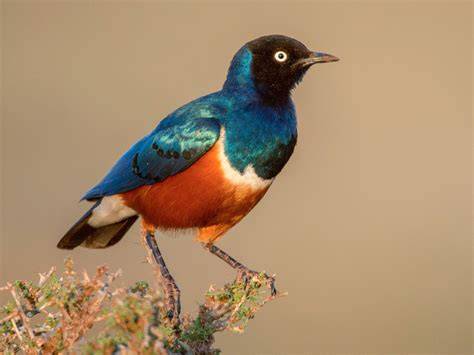
The superb starling, scientifically known as Lamprotornis superbus, is notable for its vibrant plumage. Its feathers shimmer with a mix of blue, green, and purple hues, creating a dazzling effect in sunlight. This striking coloration plays a crucial role in attracting mates and establishing dominance within flocks. As a medium-sized bird, it typically measures around 24 cm in length, featuring a long tail and a sharp, pointed bill that aids in foraging. A unique aspect of their appearance is their iridescent throat patch, which enhances their appeal.
Another fascinating characteristic of superb starlings is their adaptability to various environments. They thrive in open woodlands, savannas, and even urban areas, often seen foraging on the ground or perched on low branches. Their bold and curious nature allows them to interact closely with humans, making them particularly rewarding for birdwatchers. While they may share habitats with other birds, their distinctive coloration and behaviors make them easily recognizable among the avian community.
Where can I find superb starlings in the wild?
Superb starlings are widely distributed across East Africa, increasing your chances of encountering them. Look for them in grasslands, savannas, and open woodlands, where they forage for food. Some of the best locations to spot superb starlings include Serengeti National Park in Tanzania, Amboseli National Park in Kenya, and Nairobi National Park, known for its unique proximity to a major city.
For optimal birdwatching, early mornings or late afternoons are the best times to observe these birds, as they are most active during these periods. During the dry season, from June to October, they become particularly visible as food sources become scarcer and they gather in larger flocks. Keep an ear out for their distinctive calls, which can help you locate them even if they are not immediately visible.
What do superb starlings eat?
Superb starlings have a varied diet primarily consisting of insects, fruits, and seeds. They are often seen pecking at the ground to find ants, beetles, and other small invertebrates. Their diet also includes berries and grains, which they readily consume when available. This flexibility allows them to thrive in different habitats, switching between food sources based on availability.
Superb starlings are social eaters, frequently foraging in groups, which helps them quickly locate food and provides safety in numbers from potential predators. While they are generally not picky eaters, they prefer a mix of protein from insects and carbohydrates from fruits and seeds. This varied diet supports their energetic lifestyle and vibrant plumage.
How do superb starlings interact with each other?
Superb starlings exhibit complex social behaviors that make them interesting to observe. They are highly social birds, often found in large flocks that can number in the hundreds. Within these flocks, they engage in various interactions, such as grooming each other and vocalizing to maintain group cohesion. Their communication includes a range of whistles, trills, and chattering sounds, which serve to alert others to danger or signal the presence of food.
Hierarchy is important in their social structure, with dominant individuals asserting their status through displays of behavior. These displays can include puffing up their feathers or performing specific movements to showcase their fitness. While they are generally friendly, competition can arise during mating seasons or when food is scarce. Observing these interactions can provide insight into their social dynamics and enrich your birdwatching experience.
What should I bring for a successful birdwatching experience?
To enhance your birdwatching experience while searching for superb starlings, preparation is essential. A good pair of binoculars will allow you to observe their vibrant colors and behaviors from a distance without disturbing them. A field guide specific to East African birds can also be invaluable, helping you identify superb starlings and differentiate them from similar species.
Dress comfortably for the climate, and consider bringing a hat and sunscreen for protection against the sun. A notebook can be useful for jotting down observations. If you plan to spend extended periods in the field, pack water and snacks to stay energized. Lastly, a camera with a zoom lens can help you capture memorable moments without getting too close to the birds.
Conclusion
To spot superb starlings, focus on visiting East African parks like Serengeti and Amboseli during early mornings or late afternoons, when they are most active. Equip yourself with binoculars and a field guide, and be ready to observe their social interactions and vibrant colors. A successful encounter will leave you with lasting memories and a deeper appreciation for these remarkable birds, so take your time and enjoy the experience.
Frequently Asked Questions
What is the habitat of the superb starling?
Superb starlings typically inhabit open woodlands, savannas, and grasslands. They are adaptable birds and can often be seen in urban areas as well.
Are superb starlings social birds?
Yes, superb starlings are highly social and often found in large flocks. They engage in various social behaviors, including grooming and vocal communication.
What do superb starlings symbolize?
In many cultures, superb starlings symbolize beauty and social harmony due to their vibrant appearance and social nature.
Can superb starlings mimic sounds?
While superb starlings have a diverse range of vocalizations, they are not known for mimicking sounds like some other bird species. Their calls are distinctive to their species.
What is the breeding behavior of superb starlings?
Superb starlings are monogamous and often form strong pair bonds. They build nests in tree cavities or other sheltered locations, and both parents participate in caring for the young.